
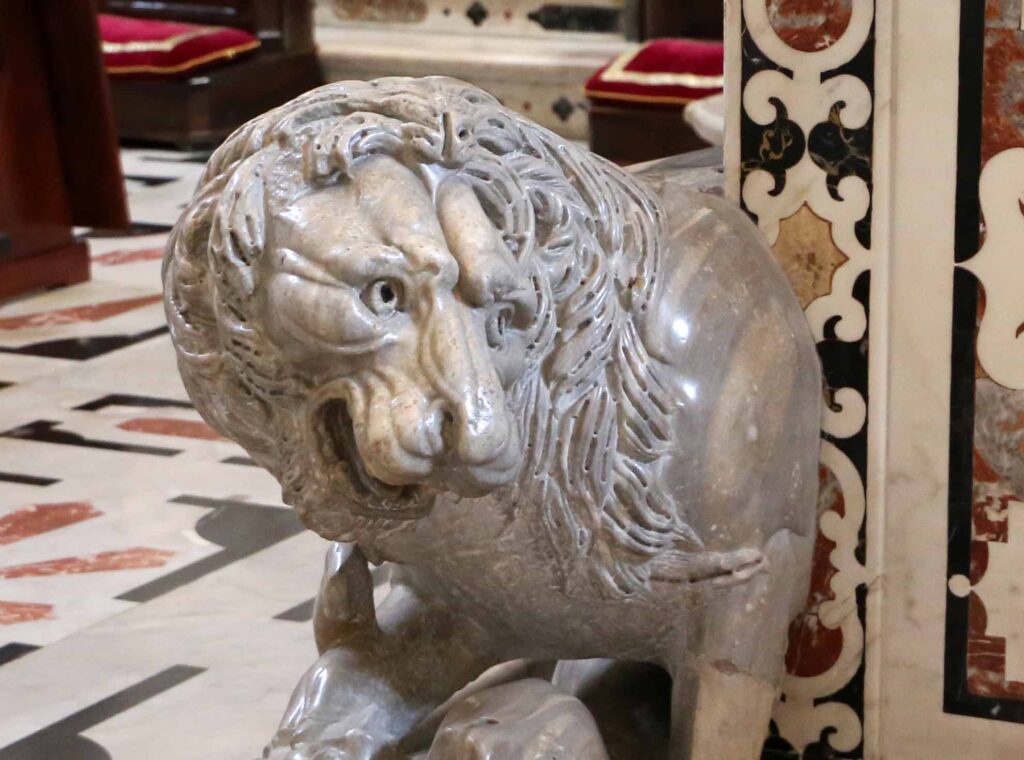
The Piazza dei Miracoli in Pisa, a UNESCO World Heritage site, is globally renowned for the Leaning Tower, the Baptistery, and the Cathedral. Yet, amidst the dazzling white marble, visitors often overlook a significant detail: the presence of various sculpted lions that act as silent sentinels, rich with medieval symbolism and deep connections to Pisan history. The study of these stone figures, particularly the stylophore lions, offers a fascinating glimpse into the artistic and political world of the medieval Maritime Republic of Pisa.
The Stylophore Lions: Stone Sentinels
Perhaps the most famous examples are the two large, marble lions that flank the entrance to the Baptistery, forming part of the structure known locally as the “Fontana dei Leoni” (fountain of the lions of Pisa), though they are not part of an actual fountain structure. These are classic examples of stylophore lions (leoni stilofori).
A stylophore is a supporting column or architectural element, and these lions are depicted holding up columns or pilasters, often resting their paws on a conquered or submissive animal (usually a ram or a smaller beast). This architectural device was extremely popular in Romanesque art, especially in Italy between the 11th and 13th centuries.
The function of these stone animals was not merely decorative. Positioned at the threshold of sacred spaces, they acted as a clear boundary, separating the profane world outside from the holy space within. Their powerful, intimidating forms were intended to guard the entrance, symbolically repelling evil spirits and protecting the faithful.
Symbolism of the Lions: Between History and Legend
The lions of Piazza dei Miracoli embody a powerful blend of religious and secular meaning, deeply rooted in the Christian and classical traditions inherited by medieval Pisa.
Religious and Classical Meanings
In Christian iconography, the lion is one of the most complex and multifaceted symbols. It can represent:
- Christ the Redeemer: Often referred to as the “Lion of Judah,” symbolizing resurrection, royalty, and power.
- The Evangelist Mark: The lion is the traditional attribute of St. Mark, whose Gospel begins in the wilderness.
- Vigilance and Guardianship: As a fierce guardian, its presence at a church or baptistery entry signifies its role as a protector against malevolent forces.
In a classical and secular sense, the lion was the king of beasts, representing courage, strength, justice, and imperial authority—qualities the rising Maritime Republic of Pisa proudly associated with itself.
The Pisan Context
For Pisa, the lion carried an additional, unique layer of political meaning linked to its maritime conquests and trade. The city state was a major power in the Mediterranean, constantly engaged in battles and trade with the East. Stylophore lions often appear at the entrances of important Pisan buildings—both religious and civic—to project an image of military might and successful commercial enterprise.
The presence of the stylophore lions around the religious heart of the city, especially those found on the Baptistery and the Cathedral, thus serves a dual purpose: they are guardians of the sacred faith and proud emblems of the Republic’s worldly power and prestige.
The silent, majestic gaze of these stone lions offers more than just a beautiful sculptural detail; it provides a key to understanding the proud, powerful, and deeply symbolic identity of medieval Pisa.