
Piazza dei Miracoli, or the Square of Miracles, in Pisa is a UNESCO World Heritage site renowned globally not only for its iconic Leaning Tower but also as a breathtaking open-air museum. This extraordinary complex of religious buildings showcases a rich tapestry of art, from monumental architecture to intricate sculptures and evocative frescoes. A visit here is a journey through centuries of Italian artistic genius, offering a unique opportunity to immerse oneself in masterpieces that tell stories of faith, history, and human creativity.
Iconic Sculptures: masterpieces to admire
The artistic wealth of Piazza dei Miracoli extends far beyond its famous leaning structure. The Baptistery, the Cathedral, and the Camposanto Monumentale are adorned with an incredible collection of sculptures, each piece a testament to the skill of master craftsmen.
The Baptistery, the largest in Italy, boasts an exquisite pulpit carved by Nicola Pisano between 1255 and 1260. This hexagonal marble structure is considered a pivotal work in Italian Gothic sculpture, anticipating the Renaissance with its classical influences and dramatic narrative reliefs depicting scenes from the Life of Christ. His son, Giovanni Pisano, later contributed to the external decoration, adding intricate Gothic flourishes.
Inside the Duomo (Cathedral), another magnificent pulpit, this one by Giovanni Pisano (completed 1310), stands as a pinnacle of Gothic sculpture. Its dynamic figures, complex compositions, and expressive power are truly mesmerizing, showcasing an evolution in style from his father’s work. The detailed carvings depict biblical scenes with a profound sense of movement and emotion, inviting contemplation and admiration.
Beyond these celebrated pulpits, numerous other sculptural elements enrich the piazza. From the elaborate bronze doors of the Duomo to the delicate statues gracing its façade, every corner reveals artistic treasures. These sculptures not only decorate the buildings but also serve as visual narratives, enhancing the spiritual and historical significance of the site.
The Frescoes of the Camposanto: an unmissable cycle
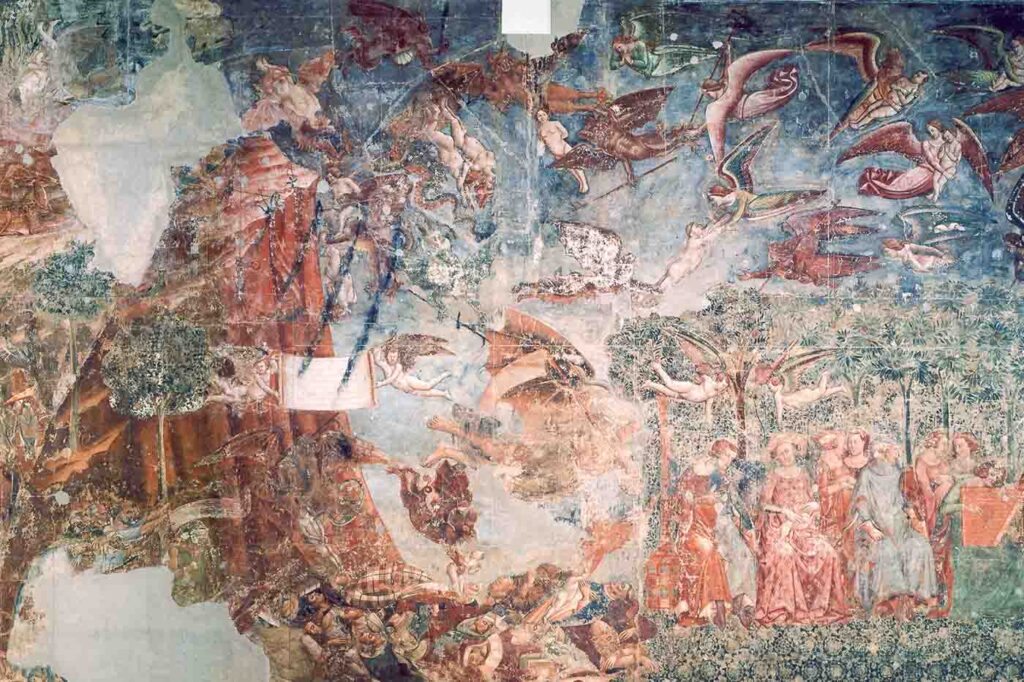
Adjacent to the Duomo and Baptistery, the Camposanto Monumentale (Monumental Cemetery) offers a different, yet equally compelling, artistic experience. This cloistered cemetery is famous for its stunning cycle of frescoes, which once covered its internal walls. While many were severely damaged during World War II, painstaking restoration efforts have brought some of these magnificent works back to life, revealing their original splendor.
Among the most famous cycles is “The Triumph of Death,” attributed to Buonamico Buffalmacco. This monumental work is a powerful allegorical depiction of death’s inescapable power, contrasted with scenes of earthly delights and monastic piety. Its vivid imagery, dramatic compositions, and moralizing themes offer a fascinating glimpse into medieval worldviews and artistic conventions. Other significant frescoes include “The Last Judgment” and “Hell,” which together formed a comprehensive narrative on the ultimate fate of humanity.
These frescoes were not merely decorative; they were didactic tools, intended to inspire reflection on life, death, and salvation. Walking through the Camposanto today, one can still feel the profound impact of these works, even in their restored and fragmented states. The sheer scale and ambition of these paintings make them an unmissable part of the artistic journey through Piazza dei Miracoli.
In conclusion, Piazza dei Miracoli is much more than a collection of famous buildings; it is a vibrant testament to the enduring power of art. From the groundbreaking sculptures that heralded a new era of artistic expression to the evocative frescoes that captured the spiritual essence of the Middle Ages, the piazza invites visitors to discover an unparalleled open-air museum. Every detail, every arch, and every sculpted figure contributes to a rich narrative, making it an essential destination for art lovers and history enthusiasts alike.